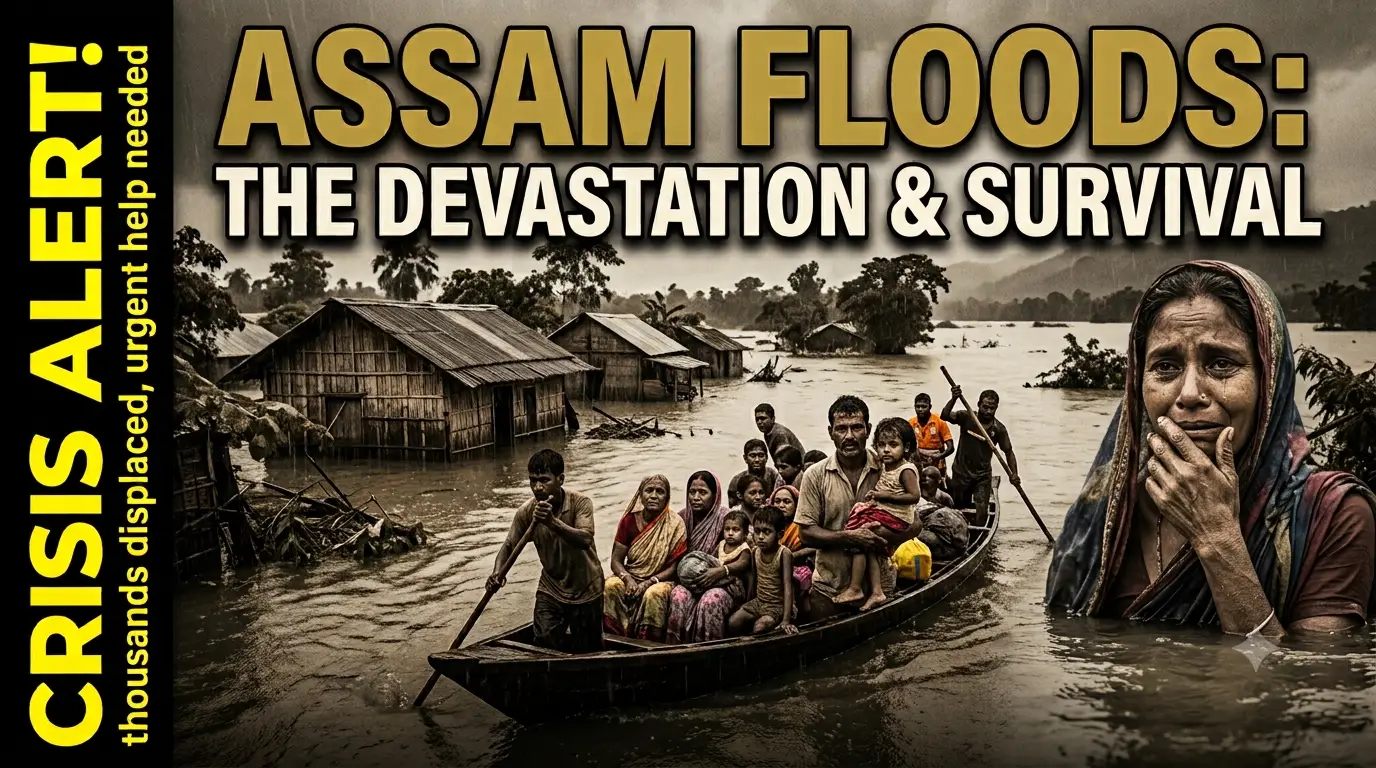

Assam Floods 2026: Latest Updates, Death Toll, and Impact on Lakhs of People
Rivers above danger level, 11 districts underwater, and rescue teams racing the clock — here’s everything happening right now.

Current Situation: Assam Floods July 2026
According to the Assam State Disaster Management Authority (ASDMA), the flood situation has turned critical over the past week. As of July 24, 2026, the numbers paint a grim picture:
Chief Minister Himanta Biswa Sarma has said the state has not yet been able to reach roughly 20% of affected people. The worst-hit districts include Sivasagar, Charaideo, Jorhat, Golaghat, Dhemaji, Dibrugarh, Kamrup, Kamrup Metropolitan, Karbi Anglong, Hojai, and Nagaon. Sivasagar has been hit hardest, with nearly 4 lakh people impacted in that district alone.
What Triggered This Wave of Flooding?
The current crisis has its roots in intense rainfall over the past two weeks. A major trigger was a cloudburst in the Mon district of neighbouring Nagaland around July 19, which sent a massive surge of water into rivers flowing through upper Assam. Combined with continuous, heavy monsoon rain across the state, this caused rivers like the Dikhow, Disang, Buridihing, Dhansiri, and Kushiyara to rise rapidly — several are now flowing above the “severe flood” mark.
Assam had already seen an earlier round of flooding and landslides in June and early July 2026, which had affected tens of thousands of people and damaged thousands of hectares of crops in districts like Dhemaji, Lakhimpur, Dibrugarh, Biswanath, and Chirang. That first wave also caused a portion of a major railway bridge in Dhemaji district to collapse due to riverbank erosion.

Human and Economic Toll
- Agriculture: Tens of thousands of hectares of farmland and standing crops damaged, threatening farming livelihoods.
- Livestock: Lakhs of domestic animals and poultry affected or lost.
- Infrastructure: Roads, bridges, embankments, and government buildings badly damaged.
- Displacement: Hundreds of villages remain underwater, forcing families into relief camps or onto rooftops and highlands.
Assam floods every monsoon due to its dense network of rivers, led by the mighty Brahmaputra and its tributaries, but 2026 is shaping up to be one of the deadlier years in recent memory.
Government and Relief Response
- SDRF and NDRF teams deployed for rescue operations in the worst-affected districts.
- Hundreds of relief camps and distribution centres set up to shelter displaced families.
- The IMD has issued Orange and Yellow alerts, warning of continued heavy rainfall, thunderstorms, and lightning.
- CM Himanta Biswa Sarma chairing daily video conferences with district commissioners to speed up relief in hard-to-reach areas.

Why Does Assam Flood Every Year?
- The Brahmaputra river system — one of the largest, most sediment-heavy rivers in the world, prone to overflowing its banks.
- Heavy monsoon rainfall across Assam, Arunachal Pradesh, and neighbouring hill states draining into Assam’s rivers.
- Upstream rainfall in Nagaland, Bhutan, and Arunachal Pradesh sending sudden surges of water downstream.
- Riverbank erosion and weak embankments increasing the risk of sudden breaches.
- Deforestation and unplanned urban development reducing natural water absorption.
Previous major flood years — 2020, 2022, and 2024 — each affected millions and caused hundreds of deaths, highlighting a recurring pattern that experts say needs long-term flood management, not just annual emergency response.
What Can Residents Do to Stay Safe?
- Avoid going near riverbanks, especially where water levels are above the danger mark.
- Move to higher ground or designated relief camps if advised by local authorities.
- Keep emergency contacts, important documents, and essential supplies ready.
- Follow official ASDMA bulletins and IMD weather alerts for real-time updates.

Conclusion
The 2026 Assam floods are a stark reminder of the state’s ongoing vulnerability to monsoon disasters. With the death toll climbing past 47, over 7 lakh people affected, and more rain forecast in the coming days, the situation remains fluid and serious. As rescue and relief operations continue, all eyes are on whether the state can reach the remaining affected population before conditions worsen further.